
The Luxuryification of Sports.
Stadiums have become entertainment districts, suites have replaced cheap seats, and the loudest fans were never the richest ones. A field essay on what gets lost when sports becomes too nice.
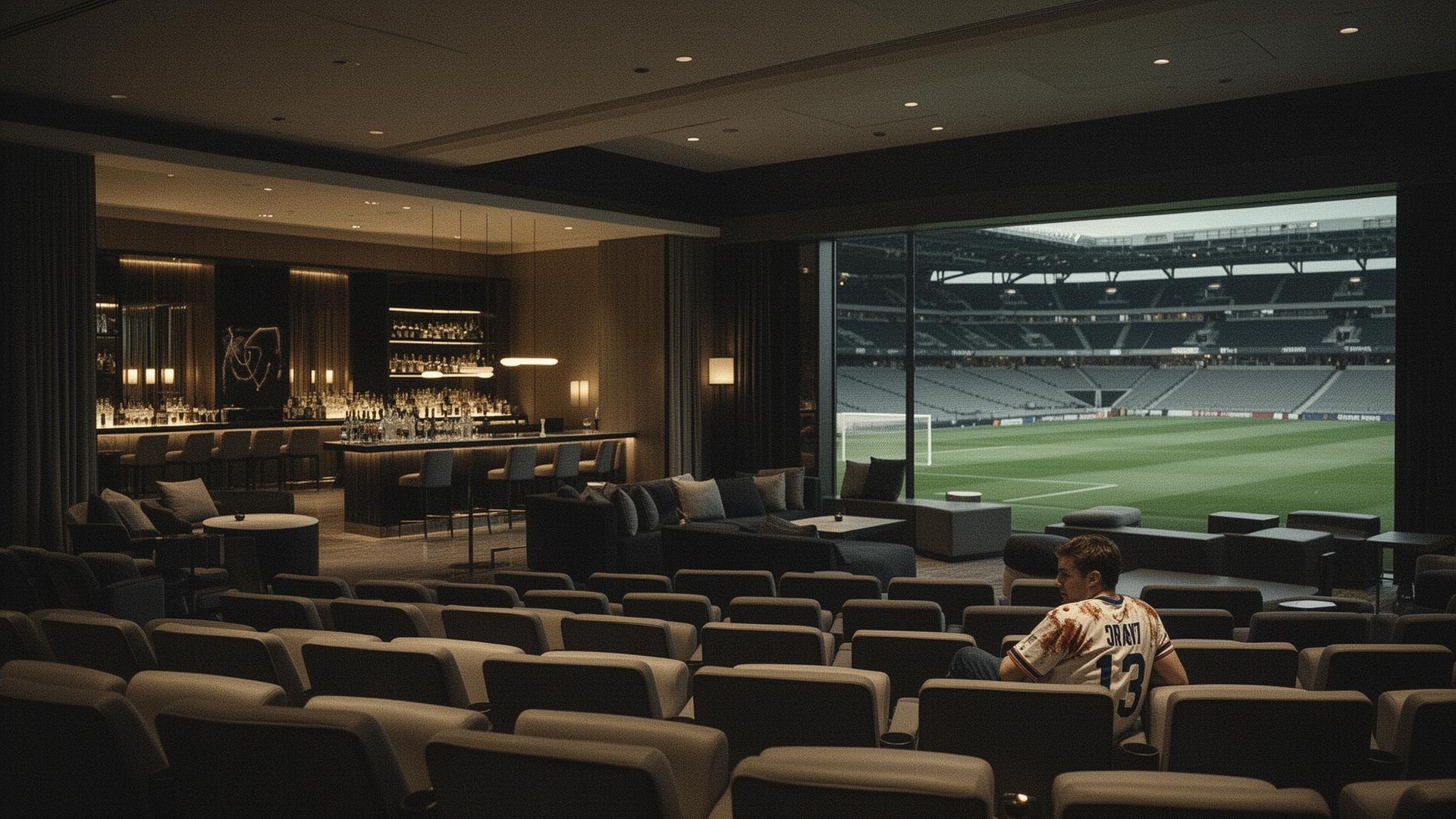
There was a time when sports felt a little rough around the edges.
“The loudest fans are rarely the richest ones. Sports culture was never built in the luxury suites. It was built in the cheap seats.”
The seats were uncomfortable. The beer was overpriced, but somehow still tasted better inside the stadium. Fans screamed things they probably should not have. The parking was chaotic. Half the crowd looked like they had been wearing the same lucky jersey for fifteen years.
And somehow, that was the point.
Sports were never meant to feel polished.
Today, something feels different.
The modern sports experience is smoother, cleaner, more premium. Stadiums have become architectural flexes filled with cocktail lounges, chef-driven menus, curated hospitality experiences, luxury suites, private clubs, and influencer-ready aesthetics. Owners call them entertainment districts now, not just stadiums. Teams are building destinations, not simply homes for games.
On paper, this all makes sense.
Sports has become an enormous business. Teams are worth billions. Player salaries continue to rise. Operating costs are immense. New stadiums are expected to compete not only with other teams, but with Netflix, luxury travel, concerts, gaming, restaurants, and increasingly short attention spans.
The fan experience had to evolve.
But somewhere along the way, a strange question quietly emerged:
What happens when sports becomes too nice?
The tension sits at the center of modern fandom. Teams want growth. Cities want investment. Owners want premium revenue. Fans want winning. Yet the very things making sports more financially successful may also be changing what made people fall in love with it in the first place.
Because sports culture was never built in the luxury suites.
It was built in the cheap seats.
For decades, stadiums functioned as one of the rare places where social classes blurred. Construction workers sat next to lawyers. Teenagers sat beside grandparents. Strangers high-fived after goals, touchdowns, or buzzer beaters as if they had known each other for years.
There are not many places left where collective emotion still works like that.
Sports became one of society's few remaining communal rituals.
A stadium after a comeback goal. A city during playoff season. A pub before kickoff. These moments feel bigger than entertainment because they temporarily erase individual identity. For a few hours, everyone belongs to the same thing.
That kind of atmosphere cannot be manufactured.
And yet, increasingly, it feels curated.
Across North America and Europe, ticket prices continue to rise. Premium seating expands. Hospitality sections grow larger. Some clubs now openly design venues around higher-spending fans rather than louder ones.
The logic is simple: fewer people spending more money.
But atmosphere does not work like economics.
The loudest fans are rarely the richest ones.
In football culture, ultras and supporter groups understand this instinctively. They know atmosphere is part of the product. The banners, chants, rituals, and emotional intensity are not side dishes to the match. They are the match.
When clubs neglect those communities, something subtle changes.
The building still looks full.
The energy feels emptier.
The same phenomenon has quietly spread across multiple leagues.
Many longtime NBA fans describe regular season games as feeling flatter than they once did. NFL crowds increasingly skew corporate in certain markets. Even European football, traditionally resistant to commercialization, faces growing criticism around ticket pricing and tourism-driven fandom.
Ask enough fans and a common feeling emerges.
The stadium still exists.
Something inside it feels missing.
Part of this shift is inevitable.
Sports is competing in a crowded entertainment economy. Teams are no longer simply selling games. They are selling experiences.
Owners understand modern fans expect more than plastic seats and stale hot dogs. They want restaurants, mixed-use districts, nightlife, hotels, premium hospitality, retail, social content opportunities, and convenience.
This evolution is not inherently bad.
Some of the best new sports developments in the world genuinely improve cities.
Done well, sports districts can activate neglected areas, drive tourism, create jobs, and turn venues into year-round destinations rather than buildings used forty nights a year.
The challenge comes when optimization replaces culture.
Because sports fans are unusual consumers.
They do not behave rationally.
Nobody watches a bad team because it offers efficient entertainment. Nobody sits in the rain for three hours because the concessions are excellent. Nobody inherits fandom from generations before them because of upgraded LED screens.
People love sports because it feels irrational.
You care deeply about people you have never met wearing laundry you did not choose.
That emotional attachment cannot be replicated through hospitality packages.
There is also something deeper happening culturally.
Modern sports increasingly reflects broader economic trends.
Cities are more expensive. Public spaces feel increasingly commercialized. Music festivals cost thousands. Restaurants feel optimized for Instagram. Neighborhoods gentrify. Nightlife becomes bottle service. Third places slowly disappear.
Sports has not escaped this.
It mirrors it.
The same people who feel priced out of cities increasingly feel priced out of fandom.
And perhaps that is why conversations around atmosphere feel more emotional than practical. Fans are not simply talking about ticket prices.
They are grieving something.
A feeling.
The feeling that sports belonged to ordinary people.
Historically, fandom rewarded loyalty more than wealth. You showed up. You suffered through losing seasons. You stayed committed. You earned your place.
Now, in some environments, access increasingly determines proximity.
The best seats are inaccessible. Premium clubs separate crowds. Hospitality areas isolate energy. Dynamic pricing turns rivalry games into luxury purchases.
Suddenly, fandom feels transactional.
There is irony in all of this.
Sports organizations are desperately searching for authenticity.
Every team wants culture. Community. Passionate fans. Organic moments. Viral crowd reactions.
But culture does not emerge from premium strategy decks.
Culture forms when people feel ownership.
And ownership comes from participation.
The fan who can barely afford season tickets but never misses a match contributes more to atmosphere than the executive entertaining clients twice a year.
Everyone inside the stadium matters.
But not equally to the feeling.
This is where the smartest organizations are beginning to separate themselves.
Rather than treating atmosphere as accidental, they are protecting it intentionally.
Some clubs subsidize supporter sections. Others freeze ticket prices for loyal fans. Some stadium designs prioritize sound over luxury inventory. Certain teams understand that visible passion creates invisible value.
The atmosphere drives broadcasts.
The broadcasts drive fandom.
The fandom drives everything else.
The irony is that premium experiences become more valuable when authentic culture still exists around them.
Nobody wants courtside seats in a quiet arena.
Luxury only feels special when energy surrounds it.
Perhaps the real question is not whether sports should evolve.
It should.
The question is whether growth and soul can coexist.
Can stadiums become more beautiful without becoming emotionally sterile?
Can sports districts create economic opportunity without removing the people who built the identity?
Can premium hospitality exist without flattening atmosphere?
The answer probably lies somewhere in balance.
Because nostalgia can be dishonest too.
Nobody truly misses obstructed views, terrible bathrooms, and dangerous stadium infrastructure. Progress matters.
But so does memory.
Sports works because it feels human. Messy. Emotional. Tribal. Unpredictable.
The best moments in sports rarely happen because everything went according to plan.
They happen because strangers erupt together.
Because cities stop breathing for a few hours.
Because one goal, shot, touchdown, or save makes thousands of people feel the exact same thing at the exact same time.
That feeling is fragile.
And if sports becomes too polished, too optimized, too expensive, too curated, there is a risk that one day we wake up and realize something uncomfortable:
The stadium looks better than ever.
But it feels quieter.
Filed nearby.
- Culture
The quiet hour.
A generation has learned to recognise the moment before a movement. The room before the noise, the artist before the rollout, the city before the rebrand. A field report from inside it.
- Culture
Notes From A Room That Doesn T Want To Be Named.
Filed quietly. Read closely. A field note from the room before the noise.
- Culture
Why The Next Stadium Tour Will Start In A 200 Cap Room.
Filed quietly. Read closely. A field note from the room before the noise.
- Culture
The Middle Budget Film Rediscovered.
Filed quietly. Read closely. A field note from the room before the noise.
0 comments
Be the first to comment.